What Is Taiwanese Cuisine?
Know More About Taiwanese Cuisine? A Complete Guide to Where to taste Taiwan in Singapore
Taiwanese cuisine is the food culture of Taiwan, shaped by a mix of Hokkien, Hakka, mainland Chinese, Japanese, and indigenous influences, and defined by a balance of savoury, sweet, and umami-rich flavours. It's a cuisine built on comfort — braises that simmer for hours, noodles in rich broths, and a night market culture that turns street food into a national identity. Understanding what Taiwanese food actually is means looking at where it came from, what makes it distinct from other Chinese cuisines, and which dishes define it.
Where Taiwanese Cuisine Comes From?
Food in Taiwan is a culture developed over centuries of migration and exchange. Early Hokkien and Hakka settlers from mainland China brought cooking techniques rooted in braising, stir-frying, and rice-based staples. Japanese colonial rule from 1895 to 1945 introduced influences still visible today, from the popularity of tempura-style fried snacks to certain seasoning styles. After 1949, waves of migrants from across mainland China added further regional dishes — Taiwanese fried chicken, beef noodle soup, for instance, is often traced to this period. The result is a cuisine known for comfort food that borrows widely but has developed its own clear identity, distinct from Cantonese, Sichuan, or Hokkien cooking on the mainland.
What Makes Taiwanese Food Different?
A few things set Taiwanese cooking apart from other Chinese food cuisines:
Balance over intensity. Where Sichuan food leans on numbing spice and Cantonese cooking prizes delicate freshness, Taiwanese cuisine tends to balance sweet, salty, and savoury in the same dish — braised pork rice is a good example, with its slightly sweet soy braise over plain rice.
Night market culture. Street food isn't a side note in Taiwan; it's central to how people eat. Night markets (夜市) function as informal dining rooms where entire meals are built dish by dish from different stalls.
Small plates and shared eating. Meals are often composed of several smaller dishes rather than one large plate, encouraging sharing and variety at the table.
Signature condiments and bases. Five-spice, soy-braising liquid (lu wei), white pepper, and fermented bean paste show up across many dishes, giving Taiwanese food a recognisable flavour thread even as dishes vary widely.
Core Taiwanese Dishes That Define Taiwanese Cuisine
If you're trying to understand Taiwanese cuisine through its food, these are the dishes worth knowing:
Lu Rou Fan (滷肉飯) — Braised Pork Rice. Minced pork belly slow-braised in soy sauce, five-spice, and shallots, served over steamed rice. Widely considered Taiwan's most representative comfort dish.
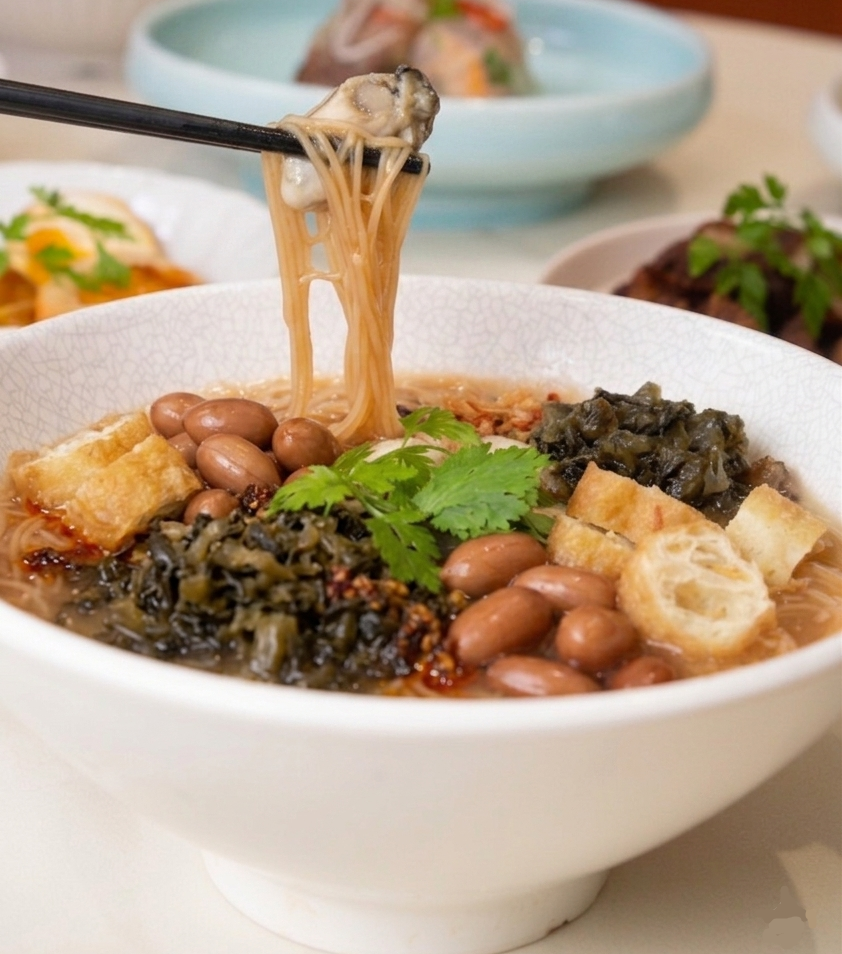
Oyster Mee Sua (蚵仔麵線) — thin wheat vermicelli in a starchy, savoury broth with fresh oysters, often finished with a drizzle of black vinegar.
Beef Noodle Soup (牛肉麵) — a hearty broth built from braised beef, star anise, and soy, considered by many to be Taiwan's unofficial national dish.
Oyster Omelette (蚵仔煎) — a night market staple of egg, sweet potato starch, and oysters, pan-fried and topped with a sweet-savoury sauce.
Three-Cup Chicken (三杯雞) — chicken braised in equal parts sesame oil, soy sauce, and rice wine with fresh basil, named for its "three cups" of seasoning.
Xiao Long Bao (小籠包) — soup-filled steamed dumplings, technically of Shanghainese origin but perfected and popularised through Taiwanese restaurants worldwide.
Bubble Tea (珍珠奶茶) — invented in Taipei Taiwan in the 1980s, this milk tea with chewy tapioca pearls is arguably Taiwan's most globally recognised food export.
Where to Try Real Taiwanese Cuisine in Singapore?
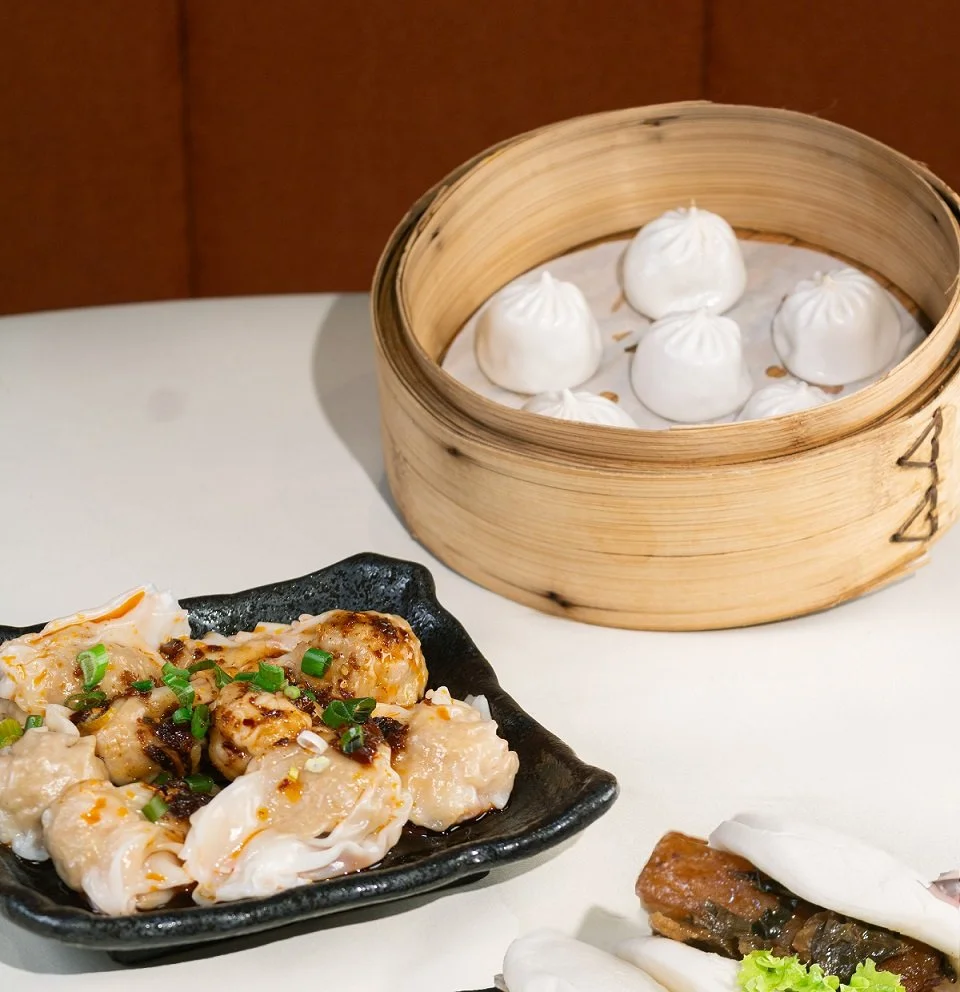
For those in Singapore who want to experience these flavours without booking a flight, Typhoon Cafe at Plaza Singapura is one of the more dedicated options. Its name is drawn from "台灣風味" (Taste of Taiwan), and the menu is built specifically around bringing that night-market energy to a Singapore dining room — Lu Rou Fan, oyster omelette, golden chicken fritters, xiao long bao, and artisan fruit teas all sit on the same menu, alongside desserts like soufflé pancakes.
The restaurant leans into the philosophy that authentic Taiwanese cuisine doesn't require sacrificing comfort or crowding into a night market — it's meant to be casual, unpretentious, and easy to share, which is very much in the spirit of how the dishes are eaten in Taiwan itself.
Taiwanese cuisine is best understood as a cuisine of balance and comfort — sweet-savoury braises, noodle soups, and a Taiwanese street food culture that turns eating into a social, exploratory experience. Whether you're researching the cuisine out of curiosity or looking to try it firsthand in Singapore, the core dishes above are the right starting point, and a Taiwanese-focused restaurant like Typhoon Cafe is a practical way to taste several of them in one sitting.
Want to Experience Taiwanese Cuisine in Singapore?
Head to Typhoon Cafe at Plaza Singapura for Taiwanese favourites, from comforting braised pork rice and xiao long bao to classic street food-inspired dishes and desserts. Reserve your table and experience Taiwanese cuisine in Singapore.
Plaza Singapura 68 Orchard Road #04-63/67 Singapore 238839
You May Also like
Latest Promotions